The exponential growth of AI applications in marketing and why it's just a beginning
AI applications in marketing have advanced faster than in most other business functions, largely due to the nature of the discipline itself. Marketing exists in nearly every organization, which makes it a natural testing ground for new technologies. At the same time, marketers operate in an environment where channels, formats, and algorithms change constantly, encouraging early adoption of new approaches. Much of marketing output is also content-driven (text, images, and video), which aligns directly with the strengths of modern Artificial Inteligence systems. As a result, AI use cases in marketing have moved quickly from experimentation into daily execution, shaping how teams plan campaigns, produce content, and engage audiences across digital channels.
A clear distinction is now emerging between how AI is used by large enterprises and how it is applied by small and mid-sized marketing teams. In large organizations, AI adoption often involves a combination of proprietary data models, custom integrations, and enterprise platforms. Companies like Netflix or Amazon rely heavily on internally developed machine learning systems trained on vast datasets to power personalization, recommendations, and demand forecasting.
At the same time, the landscape has fundamentally changed for smaller teams and individual marketers. The rise of widely accessible generative AI tools such as Anthropic’s Claude, OpenAI’s ChatGPT, and Google’s Gemini has lowered the barrier to entry. Marketers no longer need proprietary datasets or in-house models to benefit from AI. Instead, they can use pre-trained systems to accelerate content creation, campaign planning, analysis, and even strategic thinking. In practice, this means AI is has become a productivity layer available to almost anyone working in marketing.
This article focuses on how these capabilities translate into real-world applications. Rather than listing tools, it explores where AI is actively being used across the marketing lifecycleб from content creation to retentionб and how these use cases are delivering measurable business impact.
AI in content creation and organic growth
Artificial intelligence technology has had one of its earliest and most visible impacts in marketing through content. What began as automation of structured outputs, (reports, summaries, product descriptions), has evolved into a broader capability: generating, optimizing, and scaling content across formats and channels. Alongside the speed, the key shift is the ability to systematically align content with user intent, search demand, and distribution logic.
AI-assisted content production at scale
One of the earliest real-world demonstrations of AI-driven content production comes from The Washington Post and its in-house system Heliograf. Initially deployed during the Rio Olympics and election coverage, the system was designed to automatically generate short news updates based on structured data such as results and statistics.
The key takeaway is not the journalism angle itself, but the underlying mechanism: AI can take structured inputs (data feeds, templates, rules) and turn them into publishable content at scale, inclusive of audio podcasts.
This approach has since been widely adopted in marketing contexts, especially for:
- product descriptions in eCommerce
- financial or performance summaries
- localized landing pages
- data-driven blog content
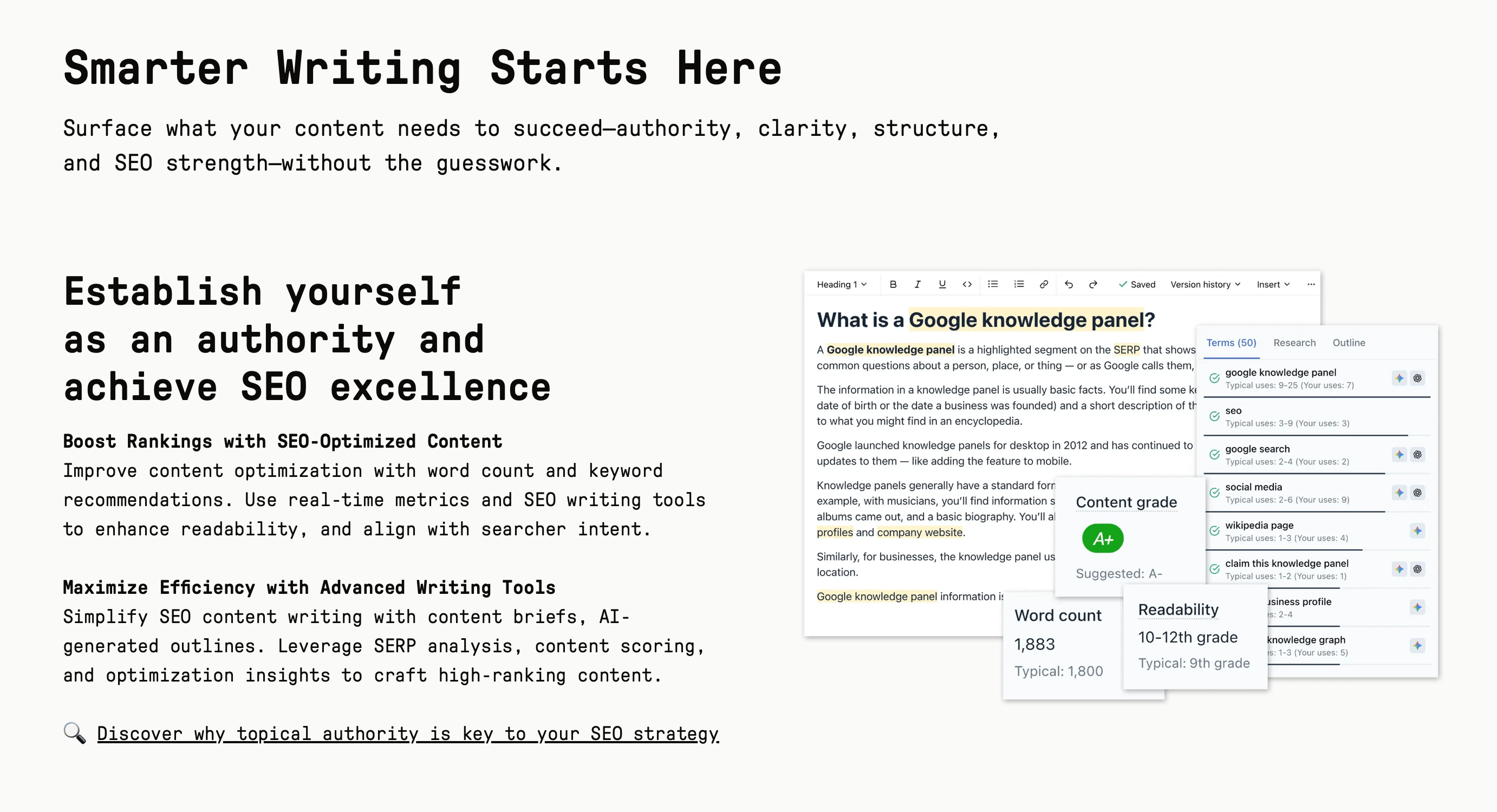
In practice, AI enables teams to cover long-tail topics that would otherwise be too resource-intensive, expanding organic reach without proportional increases in headcount.
AI-driven SEO and content optimization
Beyond content generation, AI plays a critical role in aligning content with search intent. Modern AI systems can analyze large volumes of search data, cluster keywords, and map them to user intent categories (informational, transactional, navigational).
Instead of manually planning content around isolated keywords, marketers can now:
- identify topic clusters and semantic relationships
- long-tail keyword suggestions
- optimize structure, headings, and internal linking
- predict which content formats are likely to rank
This capability has become foundational for scaling SEO strategies, particularly for companies managing large content libraries. Rather than guessing what to write, teams can base decisions on patterns derived from search behavior.

A few lightweight tools commonly used at the individual level include grammar and clarity assistants like Grammarly, which help refine content quality before publication, especially for materials like stakeholder presentations or long-form articles.
AI for social media content planning and generation
Social media has shifted from reactive posting to data-informed content planning. AI is increasingly used to:
- analyze engagement patterns across posts
- suggest optimal posting times
- generate multiple content variations for testing
- adapt messaging for different audiences or regions
In large-scale environments, this allows brands to test creative directions continuously rather than relying on periodic campaigns. For smaller teams, it enables a consistent content cadence without requiring a dedicated social media team.

While there are multiple AI marketing tools for social media content planning and generation, like Hootsuite, Buffer, Sprout social, many independent marketers successfully use Claude, ChatGPT, Perplexity to plan, schedule and create their posts across major platforms.
The practical benefit is iteration at scale, as marketers can quickly test multiple angles and double down on what resonates.
AI-powered visual content generation for marketers
Visual content such as ads, banners, thumbnails, and social creatives has traditionally been constrained by design bandwidth and production timelines. AI changes this dynamic by enabling rapid generation and iteration of visual assets, allowing teams to move from single outputs to multiple tested variations.
This capability is particularly valuable in paid media, where multiple creatives are needed for A/B testing, in social campaigns that require platform-specific formats, and in landing pages where visuals can be adapted to different audience segments. Instead of finalizing one version, marketers can generate a range of options and let performance data determine which direction performs best.
Some of the most commonly used tools for this purpose include Adobe Firefly, Canva AI tools, Midjourney, OpenAI DALL·E, and Stability AI Stable Diffusion, each offering different strengths in design control, style generation, and integration into marketing workflows.

The result is a shift toward performance-driven creative production, where speed and variation support continuous optimization rather than one-off design execution.
AI for multilingual content localization
Expanding content into new markets has historically required significant investment in translation and localization. AI now enables faster adaptation of content across languages while maintaining tone and context.
This goes beyond direct translation and includes:
- adapting messaging to cultural nuances
- aligning with local search behavior
- maintaining brand voice consistency across regions
For global companies, this allows simultaneous multi-market launches. For smaller teams, it removes a major barrier to international expansion.

Across these use cases, a consistent pattern emerges: AI is restructuring how content is produced, optimized, and distributed. What used to be a linear process (research → write → publish) is becoming a continuous loop of generation, testing, and refinement, with AI acting as the underlying engine for scale and efficiency.
AI in customer engagement and personalization
Artificial technology and machine learning algorithms have become central to how brands interact with customers across digital channels. Instead of relying on static segments or predefined journeys, marketers can now respond to behavior in real time, tailoring experiences at the individual level. This shift is especially visible in industries where customer expectations around relevance and convenience are high.
AI-driven website personalization
AI enables websites to dynamically adapt content based on user behavior, preferences, and context. This includes changing product recommendations, banners, or even navigation flows depending on how a visitor interacts with the site.
A well-documented example comes from Amazon, where personalization algorithms are used extensively across the customer journey. Product recommendations such as “Customers who bought this also bought” and "Personalized complementary product recommendations" are driven by machine learning models that analyze browsing and purchasing behavior at scale.

The practical impact is a more relevant browsing experience, which contributes directly to higher engagement and conversion rates.
AI-powered recommendation systems
Recommendation engines extend beyond eCommerce and are now a core component of many digital platforms. These systems analyze user behavior patterns to surface relevant content or products.
A widely cited case is Netflix, which uses ML algorithms to personalize content recommendations for each user. According to Netflix, its recommendation system plays a key role in helping users discover content and keep them engaged on the platform.

For marketers, similar approaches are used in product discovery, content platforms, and email campaigns, where relevance is a primary driver of engagement.
AI chatbots for product discovery, lead qualification, and customer support
Conversational AI allows brands to interact with users in real time, answering questions, guiding product discovery, and qualifying leads without human intervention.
A recent example of Gen AI usage in marketing comes from Sephora, which introduced chatbot experiences to assist customers with product selection and booking services. These conversational interfaces helped streamline the customer journey by providing immediate, context-aware responses.
In marketing contexts, chatbots are frequently used to:
- qualify inbound leads
- guide users through product selection
- reduce friction in the early stages of the funnel
AI-enhanced email personalization
Email marketing has evolved from static campaigns to highly personalized communication. AI can determine what content to send, when to send it, and to whom, based on behavioral and transactional data.
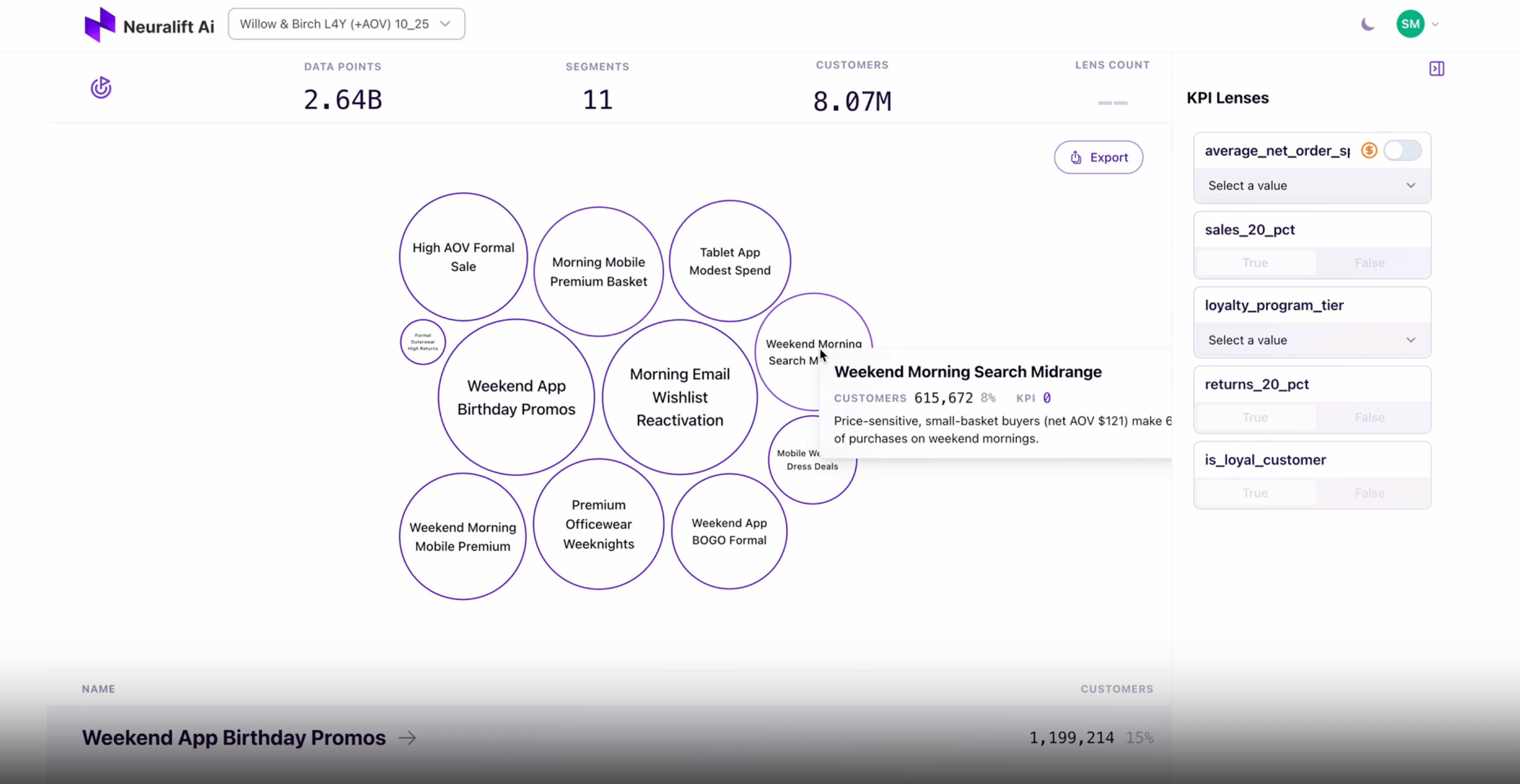
While smaller companies can create AI agents or bots to personalize outgoing emails based on recipient's company, role, recent LinkedIn posts, bigger companies may use AI-powered SaaS solutions like Apollo, Hubspot, Stripo email, that have personalization modules embedded. See Apollo's email personalization feature in action below:
This level of personalization allows marketers to move beyond broad segmentation and engage users with content that reflects their preferences and habits.
AI for behavioral segmentation
Traditional segmentation groups users based on static attributes such as demographics or location. AI introduces dynamic segmentation based on behavior, intent, and interaction patterns.
Platforms like Salesforce (via Einstein AI) enable marketers to segment audiences based on predicted outcomes, engagement likelihood, or lifecycle stage.
This approach allows for more precise targeting and improves the effectiveness of campaigns by aligning messaging with actual user behavior rather than assumed characteristics.
SMB marketers with limited budgets for multiple SaaS solutions can use general-use AI tools like NotebookLM to segment their existing customer databases according to set parameters at a less granular, but still practicable scale.
To sum it up, across these examples, AI shifts customer engagement from generalized communication to highly individualized interaction. Whether through recommendations, conversations, or personalized messaging, the focus moves toward relevance at scale. For marketing teams, this creates an opportunity to improve both user experience and measurable performance without proportionally increasing operational complexity.
AI in advertising and paid media optimization
Paid media has become one of the most data-intensive areas of marketing, which makes it a natural fit for AI adoption. Campaign performance depends on a combination of targeting accuracy, creative effectiveness, timing, and budget allocation. Artificial intelligence helps manage this complexity by continuously analyzing signals and adjusting campaigns in real time. As a result, many of the most mature AI applications in marketing can be observed in advertising ecosystems.
AI-driven ad targeting and audience modeling
One of the most established AI use cases in digital marketing in the enterprise-grade environments is audience targeting. Instead of relying on predefined segments, AI models analyze behavioral signals to identify users who are most likely to convert.
Platforms developed by Meta use machine learning to power lookalike audiences and predictive targeting, helping advertisers reach users with similar characteristics to their best customers.
Meanwhile specific AI marketing tools, like AdStellar, offer targeting strategist agents as part of the wider offering:
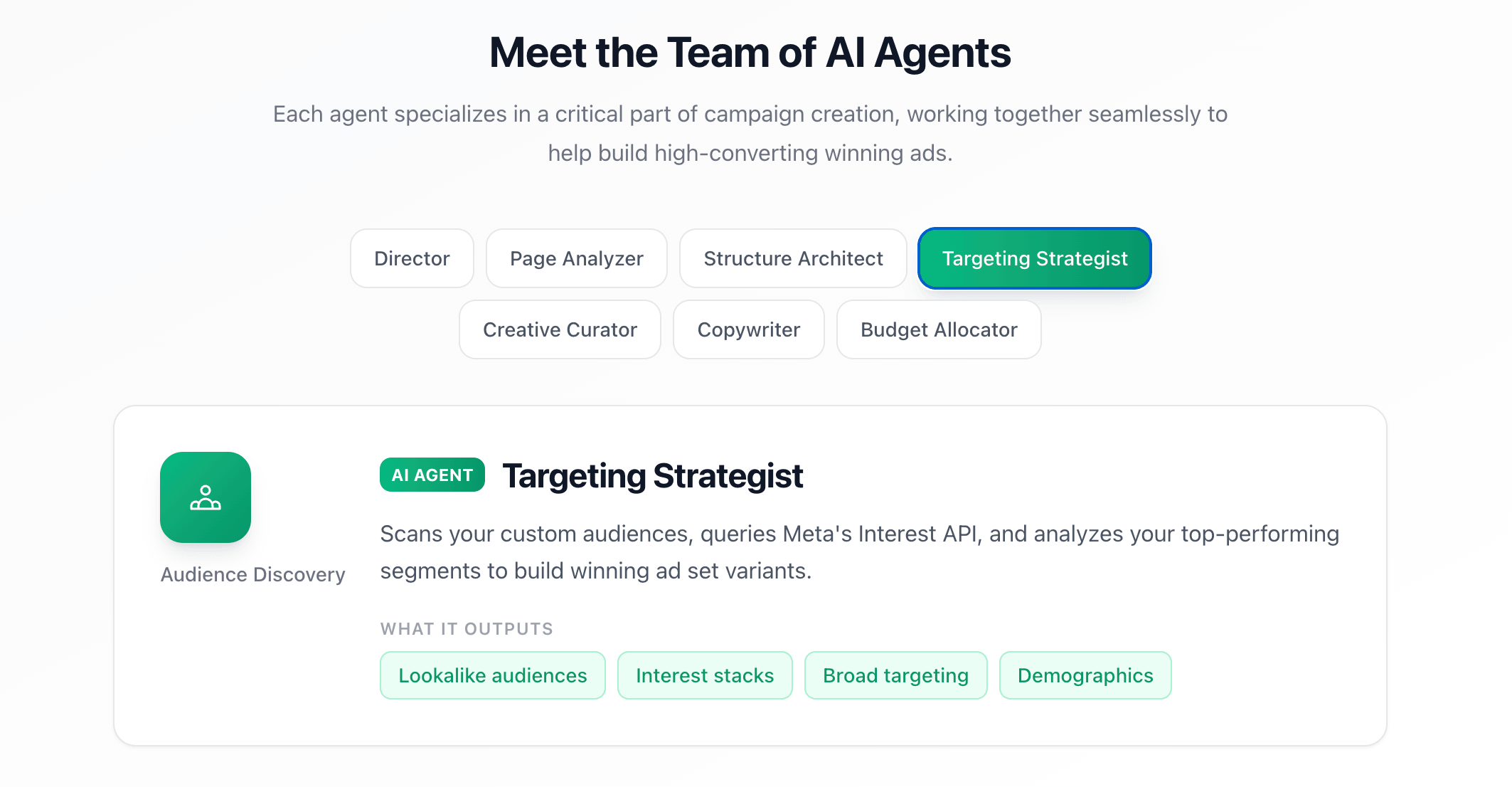
This approach improves efficiency in ai in online marketing by focusing spend on high-probability users rather than broad demographic groups.
AI for creative testing and optimization
Creative performance has historically been difficult to scale due to production constraints. AI now allows marketers to test multiple variations of headlines, visuals, and formats simultaneously.
In large organizations such as Unilever, AI has been used to evaluate and optimize digital ad creatives by analyzing which elements drive engagement.

This usage of AI in marketing shifts creative development from subjective decision-making toward data-informed iteration, a growing trend in ai use cases marketing.
AI-driven budget allocation across channels
Allocating marketing budgets across channels has always involved trade-offs between reach, cost, and performance. AI enables continuous reallocation of spend based on real-time results.
In practice, this means:
- increasing budget for high-performing campaigns
- reducing spend on underperforming channels
- adjusting bids based on conversion probability
Companies like Procter & Gamble have publicly discussed using advanced analytics and AI to improve marketing efficiency and reduce wasted spend.
Smaller companies can use one of the strong contenders of the AI marketing tools for PPC, like Optmyzr, that have an advanced budget optimization module across key digital advertising channels.

This application of artificial intelligence in digital marketing is closely tied to automation, where decision-making is embedded into campaign execution rather than handled manually.
AI for dynamic pricing and offer optimization
Dynamic pricing models adjust prices or offers based on demand, timing, and user behavior. While often associated with operations, they play a direct role in marketing performance.
A well-known example is Uber, which uses dynamic pricing (surge pricing) to balance supply and demand.

In marketing contexts, similar principles are applied to:
- promotional offers
- discount strategies
- personalized pricing
This represents a more advanced application of ai use in digital marketing, where pricing becomes part of the engagement and conversion strategy.
Many retail chains with ecommerce stores opt to use enterprise-grade third party dynamic pricing solutions in these cases, like Competera.

Across paid media, AI enables a transition from manual campaign management to continuous, data-driven optimization. Targeting, bidding, creative testing, and budget allocation are increasingly handled by algorithms that learn and adapt over time. For marketing teams, this reduces operational overhead while improving performance consistency, making AI a core component of modern advertising strategies.
AI in marketing analytics and decision-making
Marketing data tends to live in multiple systems (ad platforms, CRM tools, analytics dashboards), which makes it difficult to get a clear, unified view. AI helps bridge this gap by turning fragmented inputs into structured insights that marketers can actually act on. What stands out today is that this capability is no longer limited to large organizations with dedicated data teams. While enterprises still operate at a different scale, many of the same analytical workflows are now accessible to smaller teams using general-purpose AI tools, like Claude, Notebook LM, ChatGPT.
Predictive analytics for campaign performance
Predictive analytics allows marketers to estimate how a campaign is likely to perform before it is fully rolled out. Instead of relying on past averages or intuition, AI models can identify patterns across historical campaigns and forecast expected outcomes.
When it comes to larger organizations, solutions like those developed by IBM within Watson Analytics help teams predict performance across channels and optimize campaign setup before launch.
Meanwhile, it is not unusual for independent marketers or smaller teams to approach this differently. Campaign data is often exported into tools like OpenAI ChatGPT or Google Gemini, where it can be analyzed to identify trends, compare performance across campaigns, or highlight anomalies. The level of automation is lower, but the outcome, namely more informed decisions, is still achievable.
AI-driven customer journey analytics
Understanding how users move from first interaction to conversion is a key challenge in marketing. AI helps map these journeys by identifying common paths, friction points, and drop-offs.
In enterprise environments, platforms such as Adobe Analytics use machine learning to analyze cross-channel behavior and visualize how users interact with content throughout the journey.

At the same time, smaller teams that have limited budgets for custom AI development services, often take a more manual but still effective approach. Exporting user flow data and analyzing it with tools like Anthropic Claude or Google NotebookLM allows marketers to summarize behavior patterns, identify drop-off stages, and generate hypotheses for improvement without deep technical setup.
Artificial intelligence for attribution modeling
Attribution has always been a complex problem. Customers interact with multiple touchpoints before converting, and assigning value to each interaction requires more than simple rules.
For larger companies, Google offers data-driven attribution models that use machine learning to evaluate the contribution of each touchpoint based on actual conversion data.
Meanwhile, smaller teams often rely on simpler datasets and AI-assisted analysis. It is increasingly common to use tools like ChatGPT or Gemini to review conversion paths and identify which channels consistently appear in successful journeys. While not as precise as enterprise models, this still provides a clearer picture than traditional last-click attribution.
AI for sentiment analysis and brand monitoring
Understanding how customers perceive a brand is essential for adjusting messaging and responding to market feedback. Artificial intelligence algorithms make it possible to process large volumes of unstructured data such as reviews, comments, and social media posts.
In larger organizations, companies like Nike use data analytics and digital tools to monitor customer sentiment and adapt campaigns accordingly.

On the other hand, smaller teams often take advantage of specialized AI-powered SaaS solutions (like YouScan above), or accessible AI tools to analyze feedback at a more practical level. Reviews, survey responses, and social comments can be aggregated and processed through tools like Claude or ChatGPT to extract recurring themes, detect sentiment shifts, and highlight potential issues early.
AI-powered marketing forecasting and planning
Forecasting helps marketing teams plan budgets, set targets, and align expectations with business outcomes. AI improves this process by identifying patterns in historical data and modeling future scenarios.
At the enterprise level, international corporations like Coca-Cola invest in AI and data analytics to support marketing planning and consumer insights at scale.
Meanwhile, for smaller organizations, forecasting often becomes a more interactive process. Marketers can input past campaign data into tools like ChatGPT or Gemini and explore different scenarios, estimating ROI, testing budget allocations, or projecting performance under different assumptions.
Across analytics and decision-making, AI is gradually shifting marketing away from retrospective reporting toward forward-looking insight generation. Larger organizations benefit from integrated systems and automation, while smaller teams are increasingly able to replicate parts of this process using accessible tools and specialized AI-powered SaaS solutions. In both cases, the outcome is similar: clearer visibility into performance and more confident, data-informed decisions.
AI in retention, loyalty, and lifecycle marketing
Acquiring customers has become increasingly expensive across most digital channels, which puts more emphasis on retention and lifetime value. AI supports this shift by helping marketers understand post-purchase behavior, predict future actions, and personalize engagement over time. The same pattern seen in earlier sections applies here as well: larger organizations build integrated systems around customer data, while smaller teams rely on accessible AI tools to extract insights and act on them.
AI-powered loyalty programs
Loyalty programs have evolved from static point systems into dynamic engagement tools. AI allows brands to tailor rewards, offers, and messaging based on individual behavior rather than applying the same structure to all users.
A commonly referenced example is Starbucks, which uses AI through its Deep Brew initiative to personalize offers and recommendations within its loyalty ecosystem.
For smaller businesses, personalization at this level can still be approximated. AI tools can be used to segment customers based on purchase history or engagement frequency and generate tailored messaging for different groups. While the execution may not be fully automated, the logic behind personalization becomes more accessible.
AI for upsell and cross-sell optimization
Increasing the value of existing customers often comes down to presenting the right offer at the right time. AI helps identify which products or services a customer is most likely to purchase next.
For example, Amazon uses recommendation systems to suggest complementary products, driving additional revenue through cross-sell and upsell opportunities.
At the same time, smaller teams can use AI tools to analyze order history and generate recommendations for bundles, upgrades, or follow-up offers. Even simple prompts based on past purchases can reveal patterns that inform more effective sales strategies.
AI-driven customer feedback analysis
Customer feedback is often scattered across reviews, surveys, support tickets, and social media. AI helps consolidate and interpret this data by identifying recurring themes, sentiment, and emerging issues.
In larger organizations, companies like Microsoft use AI and analytics to process customer feedback at scale and feed insights into product and marketing decisions.
Meanwhile, smaller teams increasingly rely on AI tools to summarize feedback quickly. Reviews or survey responses can be processed through Claude, Perplexity, Notebook LM, to extract key insights, highlight common complaints, or identify areas for improvement without manual tagging or categorization.
Summing up, retention and lifecycle marketing are areas where AI delivers cumulative value over time. While acquisition efforts often produce immediate results, improvements in retention, loyalty, and customer value tend to compound. Whether implemented through enterprise systems or simpler analytical workflows, AI helps marketers maintain relevance beyond the initial conversion and build longer-term relationships with their audience.
AI in marketing examples: from practical use cases to future opportunities
Across these 20+ high-impact AI applications in marketing, a consistent pattern becomes clear: AI is not confined to a single function or channel. It spans the entire lifecycle, from content creation and audience acquisition to engagement, conversion, and long-term retention. What used to be fragmented activities are now increasingly connected through data and automation, allowing marketing teams to operate with greater precision and consistency.
Another important takeaway is the accessibility of these capabilities. Larger organizations continue to invest in integrated platforms, proprietary models, and advanced analytics to gain a competitive edge. At the same time, many of the same AI use cases in digital marketing are now within reach for smaller teams. Tools like OpenAI ChatGPT, Google Gemini, and Anthropic Claude allow marketers to analyze data, generate content, and support decision-making without the need for dedicated infrastructure.
This shift is particularly visible in AI marketing for small business environments, where the technology acts as a force multiplier rather than a replacement for existing workflows. Tasks that once required multiple specialists: content creation, data analysis, campaign planning, can now be supported by a single marketer using the right combination of tools and processes.
Looking ahead, the role of AI in the marketing industry will likely continue to expand beyond execution into orchestration. As systems become more integrated, marketers will spend less time managing individual tasks and more time defining strategy, evaluating outcomes, and guiding AI-driven processes. The practical challenge will not be access to technology, but the ability to apply it effectively across real business scenarios.
Ultimately, AI applications in marketing are becoming less about experimentation and more about operational maturity. Organizations that treat it as part of their core marketing infrastructure, rather than a separate initiative, are more likely to see sustained impact across performance, efficiency, and customer experience.